November 5, 2026
Flower coloring pages for adults: the flowers worth coloring, and how to color them
Realistic flower coloring pages for adults, from the garden rose and peony to the sacred lotus and cherry blossom, with the colors to reach for and how to make petals look real.
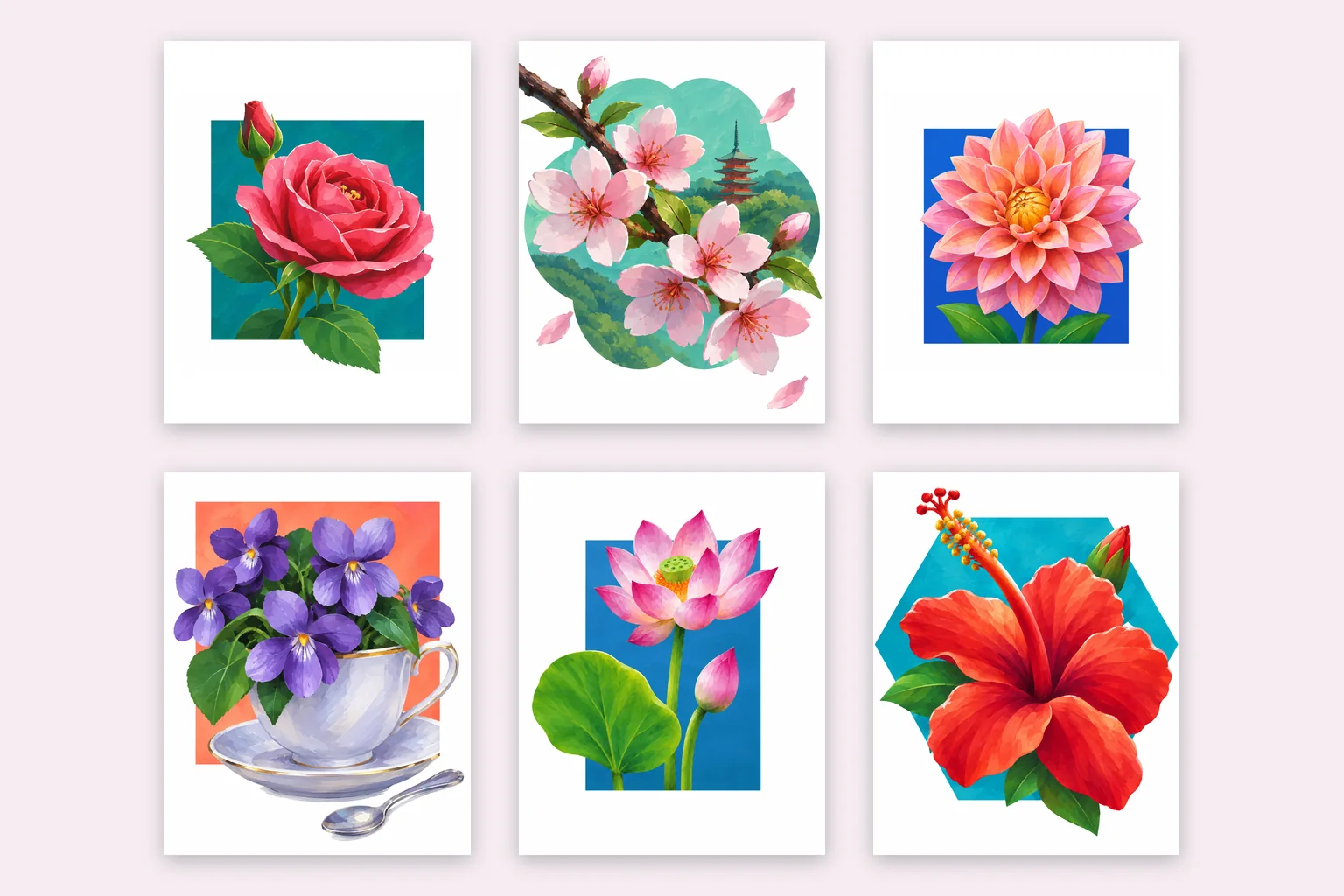
The best flower coloring pages for adults are realistic: one flower or one arrangement per page, with real petal shapes, veins and leaves to follow. Roses, peonies, dahlias, lotus, cherry blossom and hibiscus are favorites because their layered petals reward slow, careful color, and a finished page looks like a botanical print you would frame.
What makes a good flower coloring page?
- One subject per page. A single rose or one teacup of violets gives you room to blend. Busy pages of tiny flowers turn into filling in shapes.
- Real structure. Petals that overlap, curl and catch the light, so there is something to shade.
- Printed on one side only. Markers and heavy pencil will not show through onto another drawing, and you can cut the page out to frame.
- A shading guide. A light gray guide under the lines shows where the light falls before you start.
The flowers people love to color most
These are the flowers in Quiet Petals, the next Nibfern book, and the colors to reach for on each.
| Flower | Colors to reach for | Where the shading goes |
|---|---|---|
| Garden rose | Crimson, rose pink, a touch of violet in the deepest folds | The center of the bloom and under each outer petal |
| Peony | Soft pink, cream, magenta at the base of each petal | Between the ruffled inner petals |
| Dahlia | Coral, salmon, gold at the center | The cupped base of every petal, in rings |
| Sacred lotus | White to pink tips, lime seed head, blue-green leaves | The inside of the cupped petals |
| Cherry blossom | Pale pink, white, red-brown stamens, dark bark | Lightly, near the petal base; keep the tips almost white |
| Hibiscus | Scarlet, orange, a dark red throat, yellow pollen | The throat and the creases running out from it |
| Teacup of violets | Violet, purple, a yellow eye; cool grays on the china | The lower petals and the inside of the cup |
| Sunflower | Lemon and golden yellow, brown and black center | Where petals overlap, and the edge of the center disc |
The book also has all twelve birth-month flowers, from the January carnation to the December paperwhite. More on those in birth month flowers and their colors.
How to color flowers so they look real
- Start light and build up. Lay a pale base over each petal, then add the middle tone, then the darkest only where petals tuck under each other.
- Keep the edges lighter. Most petals are thinner and paler at the tips. Leave the outer edge almost bare.
- Follow the veins. Stroke from the base of the petal outward, along its veins, not across it.
- Use a cool shadow. A light violet or gray under pink and red petals looks more natural than a darker pink.
- Color the leaves in two greens. A yellow green where the light hits and a blue green in the shade make leaves sit behind the bloom.
The full technique, with pressure and layering, is in how to blend colored pencils.
Frame your finished flowers
Flowers make the easiest gallery wall. Three pages in matching frames, say a rose, a dahlia and a lotus, read as a set of botanical prints. Every Nibfern page trims to 7 x 9 inches and fits a standard 8 x 10 frame. Ideas for hanging them, and for wearing your favorite on a t-shirt, are in what to do with finished coloring pages.
Where to find realistic flower coloring pages
Quiet Petals has 45 realistic flowers, one to a page and printed on one side, and is coming soon: join the waitlist to hear the day it is out. Until then, Quiet Winter has the poinsettia, amaryllis, holly and mistletoe, and the free pages let you try the style first.
In short
Choose realistic flowers with real petal structure, one to a page. Build color from light to dark, keep the tips pale, follow the veins and shade with a cool color. Then frame three together.
Buy on Amazon Printables from $3.49
Quick answers
What are the best flowers to color for adults?
Flowers with layered petals and clear structure: roses, peonies, dahlias, lotus, hibiscus, cherry blossom and sunflowers. One flower per page gives you room to blend and shade.
How do you make colored flowers look realistic?
Build color in light layers, keep petal tips paler, stroke from the base outward along the veins, and shade with a cool violet or gray rather than a darker version of the petal color.
What colors should I use for a pink rose?
A light rose pink base, a deeper pink or crimson in the folds, and a touch of violet in the darkest shadows. Leave the outer petal edges almost white.