November 8, 2026
Ocean coloring pages for adults: the sea life worth coloring, and how to color water
Realistic ocean coloring pages for adults, from the sea turtle and octopus to the clownfish, seahorse and conch shell, with the colors to reach for and how to make water look wet.
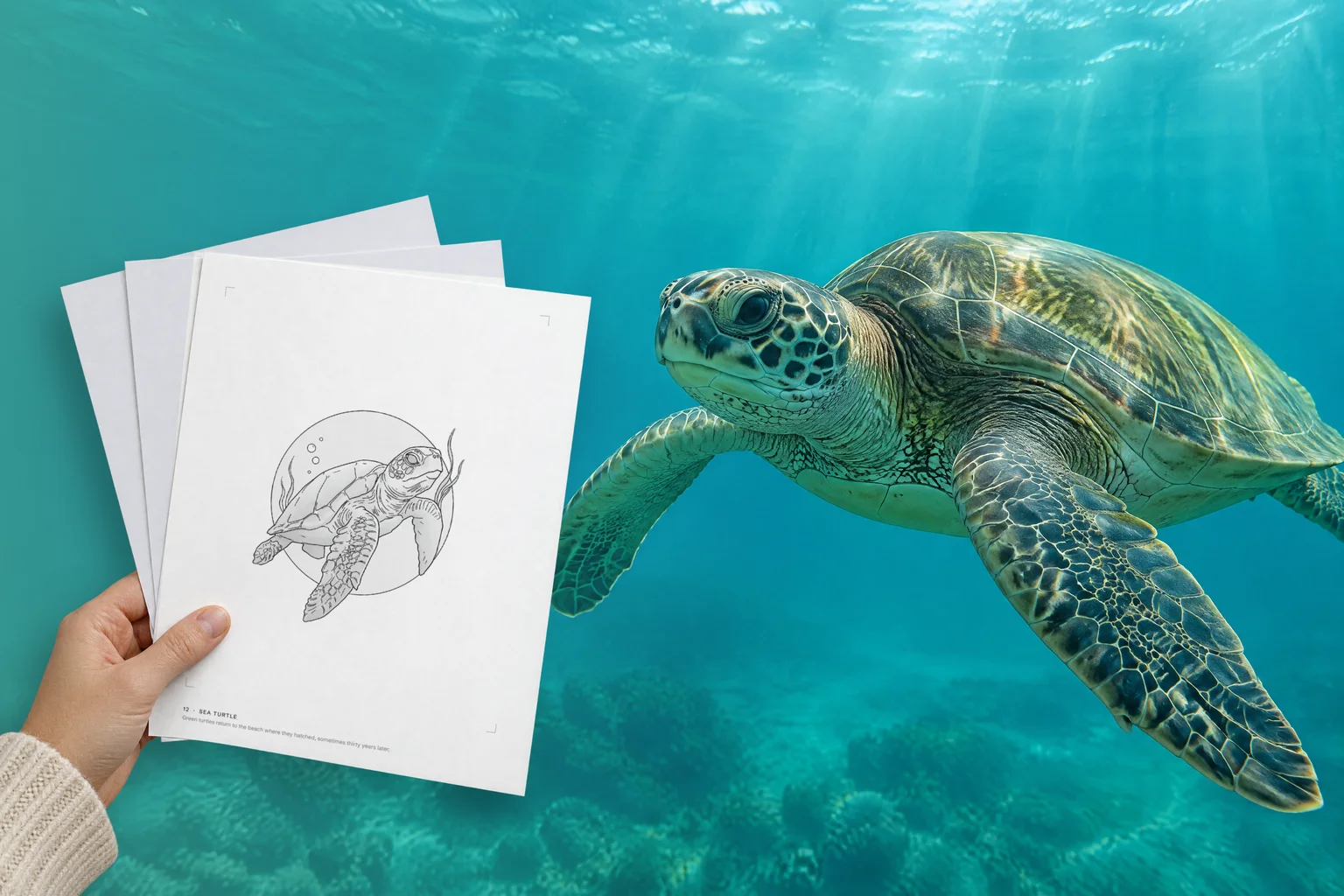
The best ocean coloring pages for adults are realistic: one animal or one shell per page, with real scales, tentacles and ridges to follow. Sea turtles, octopuses, clownfish, seahorses and jellyfish are favorites because their patterns and colors reward slow layering, and the finished pages look like natural history prints.
What makes a good ocean coloring page?
- One subject per page. A single sea turtle gives you room to work its shell plate by plate. Crowded reef scenes turn into filling in shapes.
- Real anatomy. Fins, gill lines and shell ridges drawn as they are, so the shading has somewhere to go.
- Printed on one side. Blues and greens built up in layers will not mark the next drawing.
- Sized to frame. Three sea life pages side by side make a coastal gallery wall.
The sea life people love to color most
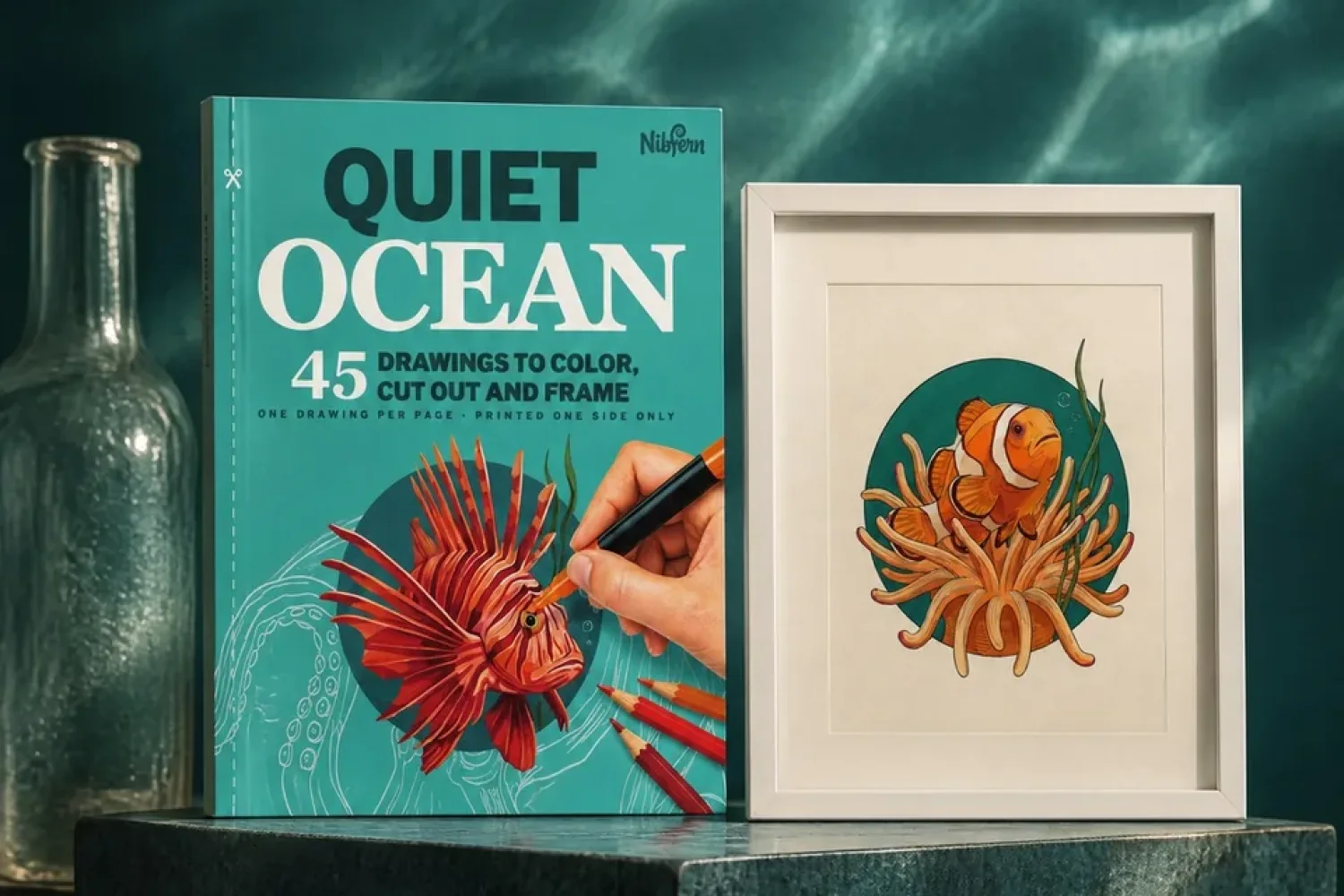
These are from Quiet Ocean, with the colors to reach for on each.
| Subject | Colors to reach for | Where the shading goes |
|---|---|---|
| Sea turtle | Olive, golden brown and amber shell plates, sea green skin | The edge of each shell plate and under the flippers |
| Octopus | Coral, red-orange, rust, pale peach suckers | The underside of each arm and between the curls |
| Clownfish and anemone | Bright orange, white bands edged in black, lilac or green anemone | Toward the belly and the base of the tentacles |
| Seahorse | Yellow, orange or rust, with darker rings on the tail | Between each body ring and under the snout |
| Moon jellyfish | Barely there: pale lilac, blue and pink over white | Lightly, at the rim of the bell; keep the center almost bare |
| Great white shark | Slate gray on top, white belly, a crisp line between | Along the side where gray meets white, and under the fins |
| Lionfish | Red-brown and cream stripes, translucent fin rays | The stripes nearest the body; let the spines fade out |
| Conch shell | Cream and tan outside, glossy pink and peach inside | Deep inside the opening and along each spiral |
| Starfish | Orange, coral or purple, with paler bumps | Down the center of each arm |
| Angelfish | Yellow and blue, or silver with dark vertical bands | Toward the tail and along the fin edges |
The book also has a dolphin, a whale shark, a hammerhead, an eagle ray, a hermit crab, a lobster, sand dollars, a ship's wheel and anchor, a diving helmet and more. Every finished page, with a color guide for each, is in the color reference.
How to color water and sea creatures so they look real
- Water gets darker with depth. Use a pale aqua near the top of the page and deepen to teal and navy toward the bottom, blending where they meet.
- Light comes from above. Keep the backs of fish and the top of a shell lighter, and shade bellies and undersides.
- Wet things shine. Leave a small white highlight on an eye, a fin or the lip of a shell.
- Pattern last. Lay the base color and shading first, then add spots, bands and stripes on top so they follow the form.
More on layering is in how to blend colored pencils.
Frame your finished sea life
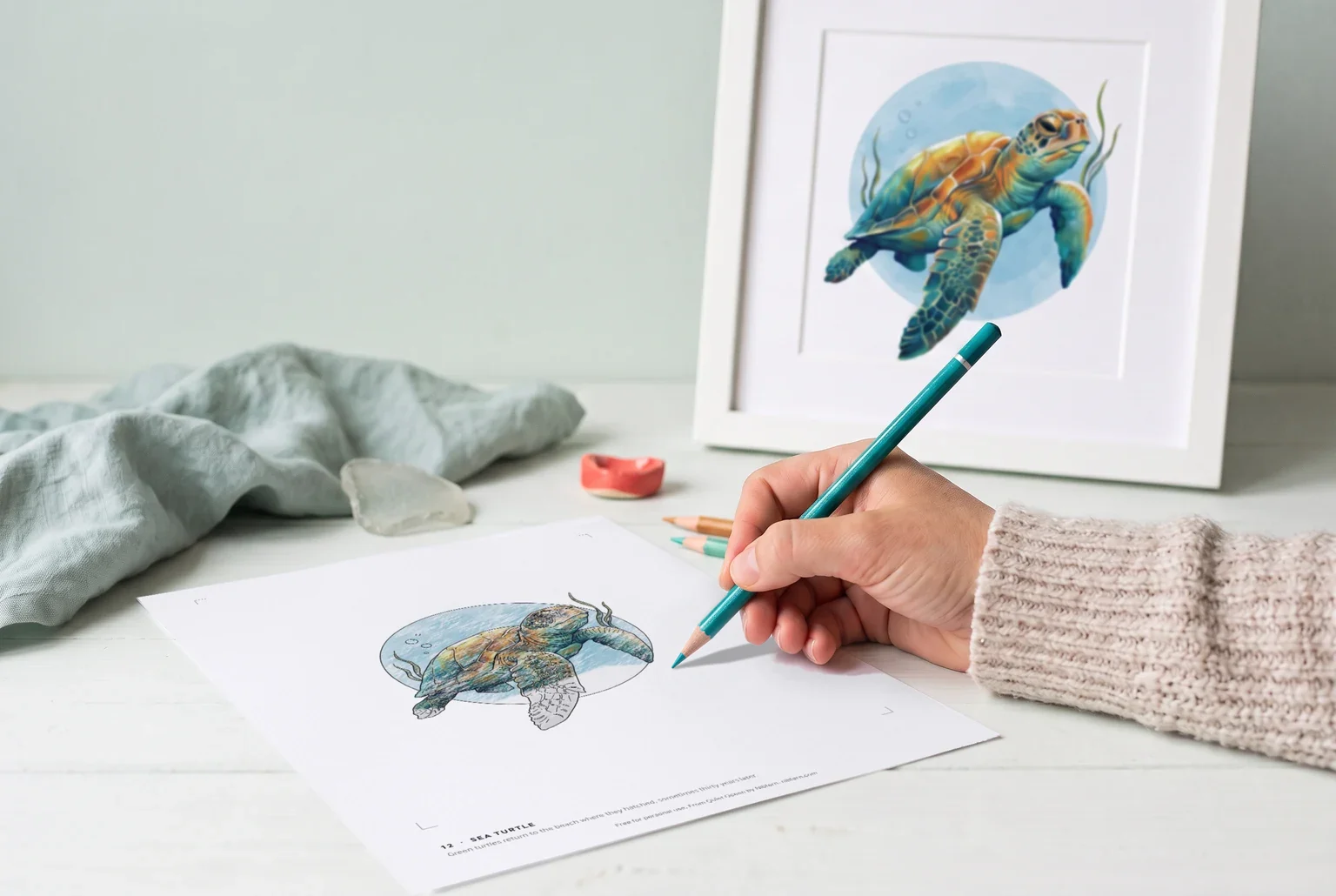
Every Nibfern page trims to 7 x 9 inches and fits a standard 8 x 10 frame. A sea turtle, an octopus and a conch shell in matching white frames make an easy coastal set. Ideas for showing them off are in what to do with finished coloring pages.
Where to find realistic ocean coloring pages
- Free: the sea turtle page is free to print from free coloring pages.
- Printable: the sea life set and the seashell and nautical set have 20 drawings each to print at home.
- Paperback: Quiet Ocean has all 45 ocean drawings, one to a page and printed on one side, on Amazon.
In short
Choose realistic sea life with real anatomy, one to a page. Deepen the water from aqua to navy, keep backs light and bellies shaded, leave a shine on wet surfaces and add pattern last. Then frame three together.
Buy on Amazon Printables from $3.49
Quick answers
What are good ocean coloring pages for adults?
Realistic pages with one subject each: a sea turtle, an octopus, a clownfish and anemone, a seahorse, a moon jellyfish or a conch shell, with real anatomy to shade.
How do you color water with colored pencils?
Start with pale aqua near the top and deepen to teal and navy toward the bottom, blending where they meet. Leave a few light streaks for movement.
What colors should I use for a sea turtle?
Olive, golden brown and amber for the shell plates, darker at each plate's edge, with sea green skin and a cream underside.